

Replacing missing teeth is one of the most important decisions you can make for your long-term oral health — and it’s one we walk patients through every week at our Orléans clinic. Two of the most common questions we hear are: “Should I get dentures or implants?” and “What’s actually going to feel normal again?”
The honest answer is: it depends. But after helping hundreds of patients make this choice, we’ve learned exactly what factors matter most. This guide breaks it all down — not just the pros and cons, but the real clinical considerations that often get left out.
What Are Traditional Dentures?
Dentures are removable prosthetic teeth set in an acrylic base shaped to fit over your gums. They rely on suction, muscle control, and sometimes dental adhesive to stay in place. Full dentures replace an entire arch (upper or lower), while partial dentures fill gaps when some natural teeth remain. This is a common treatment approach for Orleans dentures.
What most guides don’t tell you: The fit of dentures changes over time — sometimes within the first year. This happens because the jawbone beneath them slowly resorbs (shrinks) when it no longer has tooth roots stimulating it. According to the Canadian Dental Association, patients can lose up to 25% of jawbone volume in the first year after tooth loss. This is why dentures that fit perfectly at first often become loose and need relining or replacement within 5–7 years.
What Are Dental Implants?
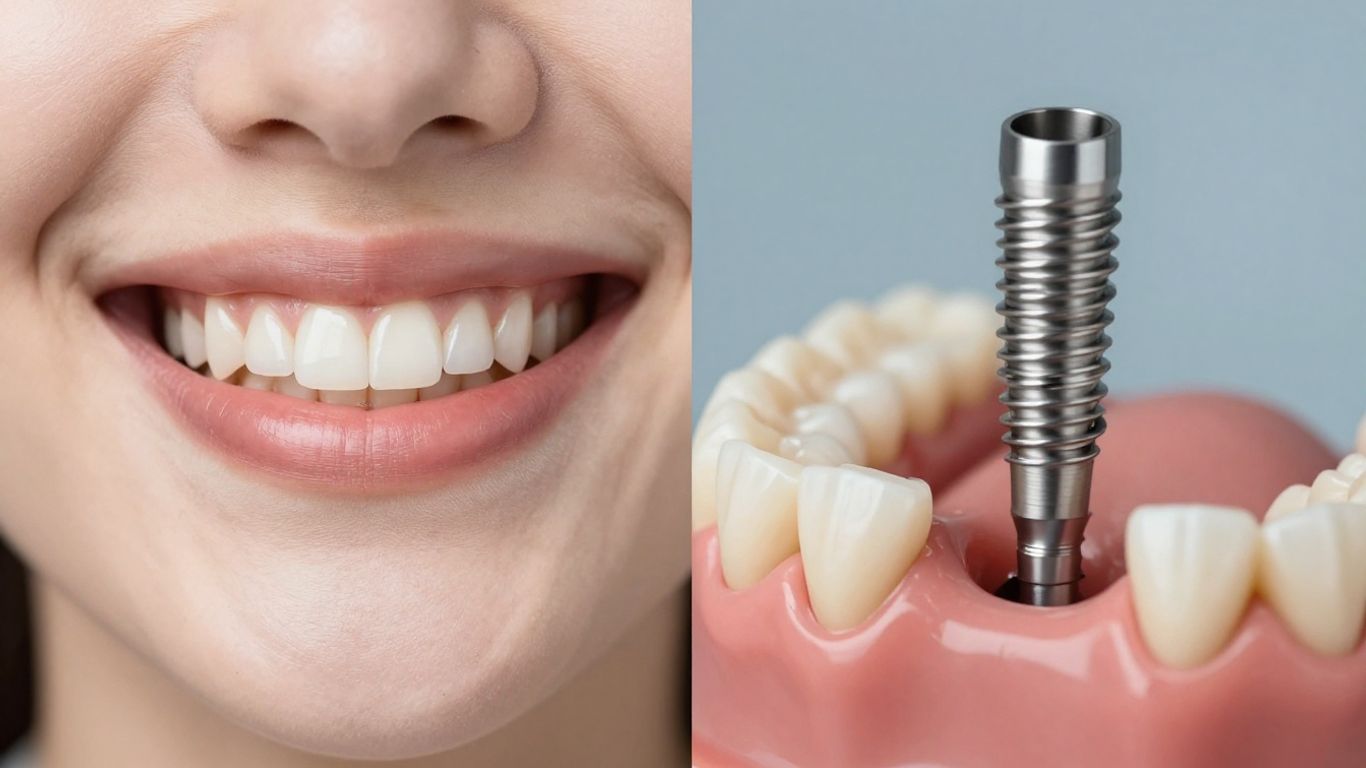
A dental implant is a small titanium post — typically 3.5 to 5mm in diameter — that is surgically placed into the jawbone to act as an artificial tooth root. Once the implant integrates with the bone (a process called osseointegration, which typically takes 3–6 months), a custom-made crown, bridge, or implant-supported denture is attached on top.
Clinical detail worth knowing: Titanium is used because it is biocompatible — the bone actually grows around and fuses to it. This is why implants have a long-term success rate of over 95% at 10 years, according to peer-reviewed research published in the Journal of Oral Implantology. The implant post itself rarely fails; issues, when they do occur, are usually with the crown above the gumline.
Implant-Supported Dentures: The Middle Ground
A third option that many patients overlook is implant-supported dentures (also called snap-in dentures or overdentures). Instead of relying on suction, the denture snaps onto 2–4 implants placed in the jaw, giving dramatically better stability than traditional dentures while costing less than a full fixed implant bridge.
At our clinic, this is often the option we recommend for patients who want more confidence than traditional dentures provide, but who aren’t candidates for — or can’t afford — a full set of individual implants. We’ve seen patients go from feeling embarrassed to eat in public with traditional dentures to comfortably enjoying meals with implant-supported overdentures.
Pros and Cons of Dentures
Advantages
- Lower upfront cost. Traditional dentures are generally the most affordable tooth replacement option, making them accessible for patients without insurance coverage or on a fixed income.
- No surgery required. This matters significantly for patients with cardiovascular conditions, blood thinners, or other health factors that increase surgical risk. Your physician and dentist should always be consulted together.
- Faster to complete. A standard set of dentures can often be ready within a few weeks. Implants require months of healing.
- Works with reduced bone. Patients who have experienced significant bone loss may not have enough jawbone to support implants without bone grafting surgery. Dentures have no minimum bone requirement.
Disadvantages
- Bone loss continues underneath. Because dentures don’t stimulate the jawbone, the bone keeps resorbing. Over 10–20 years, this can visibly change the shape of your face — a sunken look around the mouth is a classic sign.
- Stability issues are real. Lower dentures in particular are notoriously difficult to keep stable. Chewing tough foods, laughing, or even speaking can cause movement, which affects confidence and comfort.
- Ongoing maintenance costs add up. Plan for relining every 2–3 years and full replacement every 5–10 years. These recurring costs can approach or exceed the cost of implants over a lifetime.
- Dietary restrictions. Many denture wearers quietly avoid hard, crunchy, or sticky foods. This can impact nutrition over time, particularly in older adults.
Pros and Cons of Dental Implants
Advantages
- Closest to natural teeth in function and feel. Because implants are anchored in bone, bite force is transmitted naturally. Most patients tell us they forget the implant is there.
- Preserve jawbone. The mechanical stimulation from chewing through an implant root prevents the bone resorption that occurs with dentures. This preserves facial structure long-term.
- Long-term cost efficiency. While upfront costs are higher, implants rarely need replacement. The implant post can last a lifetime; the crown may need replacement after 15–25 years, which is a minor cost compared to repeatedly replacing full dentures.
- No adhesives, no soaking. You brush and floss implants just like natural teeth. There’s no nightly removal ritual.
Disadvantages
- Higher upfront cost. A single implant in Canada typically ranges from $3,000–$5,000 all-in (implant, abutment, and crown). Full-arch restoration costs significantly more. Not all insurance plans cover implants.
- Surgery and healing time required. The process from first appointment to final crown takes 4–9 months in most cases. Patients need to be healthy enough for minor oral surgery.
- Bone density requirements. Patients with significant bone loss may need a bone graft before implants are possible, adding cost and time. A CBCT scan (cone beam CT) is standard for assessing bone volume before treatment planning.
- Not suitable for everyone. Active smokers, uncontrolled diabetics, and patients receiving certain medications (like some bisphosphonates) have higher implant failure rates and need careful evaluation.
How to Choose: Key Factors
Your Jawbone Health
This is often the deciding factor. If you’ve been missing teeth for several years, bone loss may already have occurred. At Mer Bleue Dental, we use 3D imaging to assess bone volume before any implant consultation. If bone grafting is needed, that adds 3–6 months and $1,500–$3,000+ to the process.
Your Budget and Insurance
Ask your dental office to break down the full cost of each option over a 10-year and 20-year horizon — not just the upfront fee. Factor in denture relining, replacements, and adhesive costs on one side; and crown replacement (if needed) on the implant side. If you’re eligible for the Canadian Dental Care Plan (CDCP), verify which procedures are covered — our team can help you understand your benefits at merbleuedental.com/canadian-dental-care-plan.
Your General Health
Surgery requires healing. Patients with well-controlled diabetes, heart conditions, or immune system issues may still be good implant candidates — but it requires collaboration between your dentist and your physician. Patients on blood thinners need specific protocols. Never assume you’re not a candidate without a thorough consultation.
Your Lifestyle and Priorities
If stability and eating without worry are your top priorities, implants or implant-supported dentures will serve you better. If minimizing upfront cost and avoiding surgery matter most, traditional dentures remain a solid, proven solution that millions of Canadians live comfortably with.
Cost Comparison at a Glance
| Traditional Dentures | Implant-Supported Dentures | Full Implants (per tooth) | |
|---|---|---|---|
| Upfront Cost (approx. CAD) | $1,500–$3,500 per arch | $6,000–$15,000 | $3,000–$5,000 |
| Requires Surgery? | No | Yes (2–4 implants) | Yes |
| Expected Lifespan | 5–10 years before replacement | 10–20+ years | 20+ years (implant post) |
| Bone Preservation | No | Partial | Yes |
| Stability | Low–Medium | High | Highest |
Costs vary by complexity, number of teeth, and whether bone grafting is needed. All figures are estimates for the Ottawa/Orléans region.
How to Clean Implant Dentures
Implant-supported dentures require a slightly different cleaning routine than traditional dentures:
- Remove the denture daily (for removable overdentures) and clean it with a soft-bristled brush and non-abrasive denture cleaner. Avoid regular toothpaste, which is too abrasive for acrylic.
- Clean the implant attachments on the denture with a small interdental brush to remove biofilm from the connection points.
- Clean around the implants in your mouth using a water flosser or floss threader. Standard floss can’t easily reach under the denture when worn, so these tools are essential.
- Soak the denture overnight in a dentist-recommended solution to prevent bacterial buildup.
- See your dentist every 6 months for professional cleaning of the implant components and to check that the attachment mechanisms (snaps or bars) are functioning correctly. These do wear and may need replacement every 1–3 years.
Fixed implant bridges (non-removable) are cleaned in place — no removal needed — using a water flosser, interdental brushes, and a floss threader under the bridge.
Our Recommendation: Start with a Consultation, Not a Decision
There’s no universally “better” option between dentures and implants — only the right option for your specific bone structure, health, budget, and priorities. At Mer Bleue Dental Centre in Orléans, we take time to walk through all three options (traditional dentures, implant-supported dentures, and individual implants) with imaging and a full cost breakdown before recommending anything.
Ready to explore your options? Call us at (613) 841-9111 or request an appointment online. We’re located at 2020 Lanthier Dr., Unit 1, Orléans, Ontario.
Frequently Asked Questions
What’s the main difference between dentures and implants?
Dentures rest on your gums and are removable. Implants are anchored in your jawbone surgically, functioning like artificial tooth roots. The core practical difference is stability: implants don’t move; traditional dentures can.
Can I get implants if I don’t have much jawbone?
Often yes, but it requires a bone graft first to rebuild the volume needed to support the implant. This adds time and cost. Your dentist needs a CBCT scan to assess your bone before advising you.
How do you clean implant dentures?
Remove daily, brush with non-abrasive cleaner, clean the attachment points with an interdental brush, clean around the implants in your gums with a water flosser, and soak overnight. See your dentist every 6 months for professional maintenance of the implant components.
Are implants more comfortable than dentures?
Most patients report implants feel more natural because they don’t move. Implant-supported dentures are considerably more comfortable than traditional dentures for the same reason. Traditional dentures can cause gum soreness, especially during eating.
Which option lasts longer?
Implant posts (the part in the bone) can last a lifetime with good oral hygiene. Crowns or denture attachments on top may need replacement after 15–25 years. Traditional dentures typically need relining every 2–3 years and full replacement every 5–10 years.
What’s the biggest downside of each?
For traditional dentures: ongoing bone loss and eventual instability. For implants: higher upfront cost and the requirement for surgery and adequate bone. For implant-supported dentures: the snap attachments wear and need periodic replacement.