
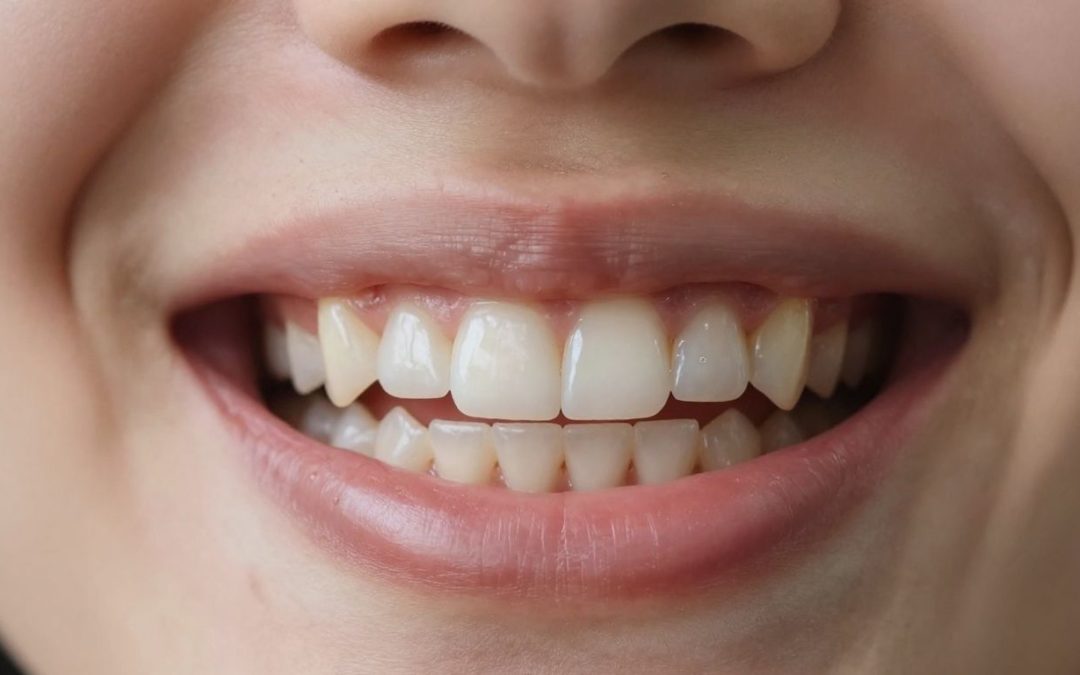
Can Invisalign fix my overbite, or do I need braces?” It’s one of the most common questions we get from adult patients at our Orléans clinic — usually from people who were told as teenagers they needed braces, never got around to it, and now want a straighter bite without a mouth full of metal.
The short answer: for many mild-to-moderate overbites, yes, Invisalign can correct them. For more significant cases, it depends on whether the issue is really about tooth position or about the underlying jaw structure — and that distinction matters more than most patients expect.
What Counts as an Overbite?
A small amount of overlap between your upper and lower front teeth is completely normal — most people’s upper teeth cover roughly a third to half of the lower teeth when they bite down. An overbite becomes a concern when that overlap is more pronounced than that, which can eventually contribute to jaw strain, uneven wear on the front teeth, or difficulty with certain sounds when speaking.
Overbites usually trace back to one of a few causes: childhood habits like prolonged thumb-sucking, losing baby teeth earlier than expected, or simply how the jaw developed. None of that means it’s your fault — it just helps explain why the correction options differ from person to person.
Where Invisalign Works Well — And Where It Doesn’t
Invisalign uses a series of custom clear aligners, each worn for one to two weeks, to gradually shift teeth into a better position. For overbites, this means gently moving the upper front teeth back and the lower teeth forward until the bite comes into better alignment.
Where Invisalign tends to work well: overbites that are primarily about tooth position rather than jaw structure. In these cases, we’re often able to use small tooth-coloured attachments, and sometimes elastics connecting the upper and lower aligners, to help guide the bite into place.
Where it gets more complicated: if the overbite stems mainly from how the jaw itself is positioned — a skeletal issue rather than a dental one — aligners alone may not be enough. In those cases, we’ll usually talk about combining Invisalign with other appliances, or refer for an orthodontic consultation where traditional braces or, in more significant cases, surgical options may be discussed.
We don’t have a precise millimeter cutoff we can give you in a blog post — every bite is assessed individually with a clinical exam and imaging, not a general rule of thumb.
What the Process Actually Looks Like
Consultation and assessment. We start with a full exam, plus digital scans or X-rays, to understand whether your overbite is dental, skeletal, or a mix of both. This is also where we’re honest with you about whether Invisalign is a good fit, or whether another option would serve you better.
Custom aligners. Once we have a treatment plan, your aligners are fabricated from digital scans of your teeth — no messy impressions needed.
Daily wear. You’ll wear each set for 20–22 hours a day, switching to the next set roughly every one to two weeks. Consistency genuinely matters here — patients who take them out too often are the ones who end up needing longer treatment or a mid-course correction.
Check-ins. We see patients every six to eight weeks to track progress and hand over the next batch of aligners.
Overall timeline. Most overbite cases we see run somewhere between 12 and 24 months, though simpler cases can finish sooner and more complex ones can take longer. Anyone who gives you a single fixed number without having examined your bite is guessing.
Why Patients Choose Invisalign
The appeal isn’t just cosmetic. Removable aligners mean no food restrictions and no extra effort brushing around wires — which, in our experience, translates into better oral hygiene through treatment compared to fixed braces for a lot of patients. They’re also far less noticeable day-to-day, which matters to a lot of the adults we treat who don’t want their coworkers or clients to clock that they’re in orthodontic treatment.
Realistic Trade-Offs to Consider
We’d rather you go in with clear expectations than a sales pitch:
- It requires discipline. 20–22 hours a day isn’t flexible — if you’re someone who tends to lose things or forget to pop them back in after meals, that’s worth being honest with yourself about before starting.
- More complex bites take longer, and may need attachments or elastics that make the aligners slightly more visible than the “invisible” marketing suggests.
- Cost varies depending on case complexity and how many aligner sets are needed — we’ll give you a specific quote after your exam rather than a ballpark that may not apply to your bite.
- Adults sometimes take longer than teens, simply because a still-developing jaw responds to movement differently than a fully mature one.
Is It Right for You?
That really comes down to a proper exam — not a checklist. But a few honest questions worth asking yourself before booking a consult: Is your main concern how your teeth look, or has a dentist mentioned jaw involvement too? Can you realistically commit to wearing aligners most of the day, most days? And are you looking for something less visible than braces during treatment?
If you can say yes to most of that, Invisalign is worth discussing. If jaw structure is a bigger factor, we’ll tell you that directly and walk you through what else might be a better fit.
Frequently Asked Questions
Can Invisalign really fix an overbite?
For many mild-to-moderate cases where the issue is primarily tooth position, yes. More significant overbites involving jaw structure often need additional appliances or a referral for further evaluation.
How long does treatment usually take?
Most of the overbite cases we treat run 12–24 months, depending on severity and how consistently the aligners are worn.
Will I need anything besides the aligners?
Sometimes. Depending on your bite, we may add small attachments or elastics to help guide tooth and jaw movement.
Is Invisalign better than braces for an overbite?
Neither is universally “better” — it depends on your bite. Invisalign tends to suit milder, tooth-position-driven cases well; more significant structural overbites are sometimes better served by braces or a combined approach.
Can adults get the same results as teens?
Often, yes — but a fully developed jaw can respond more slowly to movement than a growing one, so treatment length can differ.
Next Step
If you’re in Orléans or the wider Ottawa area and want a straight answer on whether Invisalign fits your bite, book a consultation with our team at Mer Bleue Dental Centre — we’re located at 2020 Lanthier Dr., Unit 1, and can be reached at (613)-841-9111. We’re a bilingual (English/French) practice and a participating CDCP provider, so it’s worth asking about coverage during your visit as well.
This article is intended for general educational purposes and does not replace a personalized clinical assessment. Individual results and timelines vary based on each patient’s bite and jaw development.